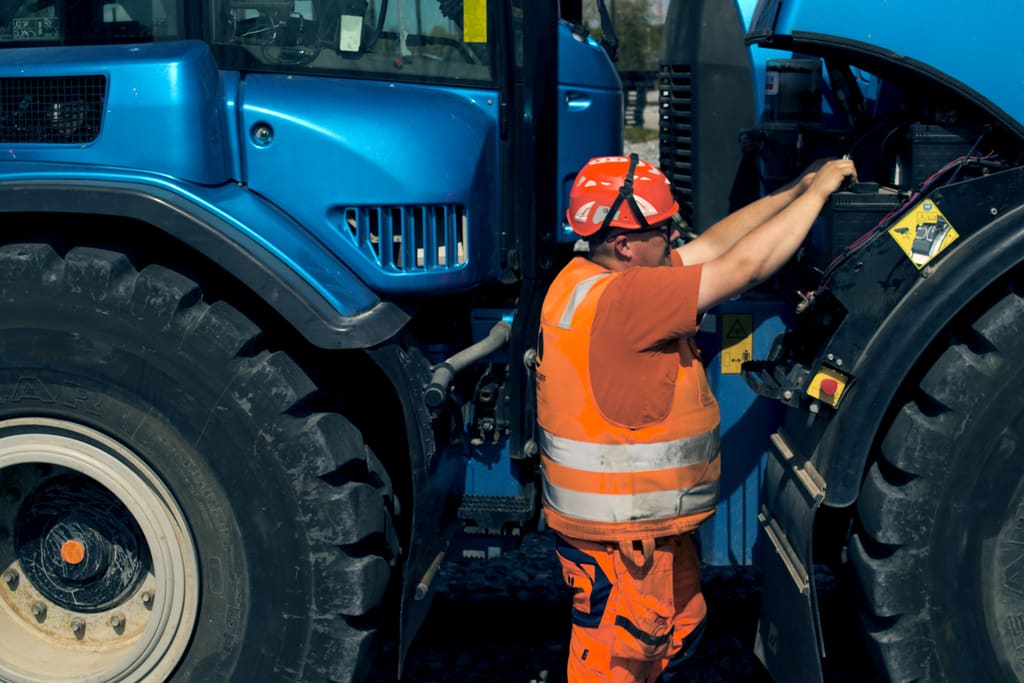
Power solution for work vans
230 V power in a van – reliable power for tools and equipment, wherever you work.
Having 230 V power in your van turns it into more than just transport. With the right power system, you can run electric tools, charge batteries and use multiple pieces of equipment at once – inside and outside the vehicle. Even with the engine off.
Explorer the system configurator.
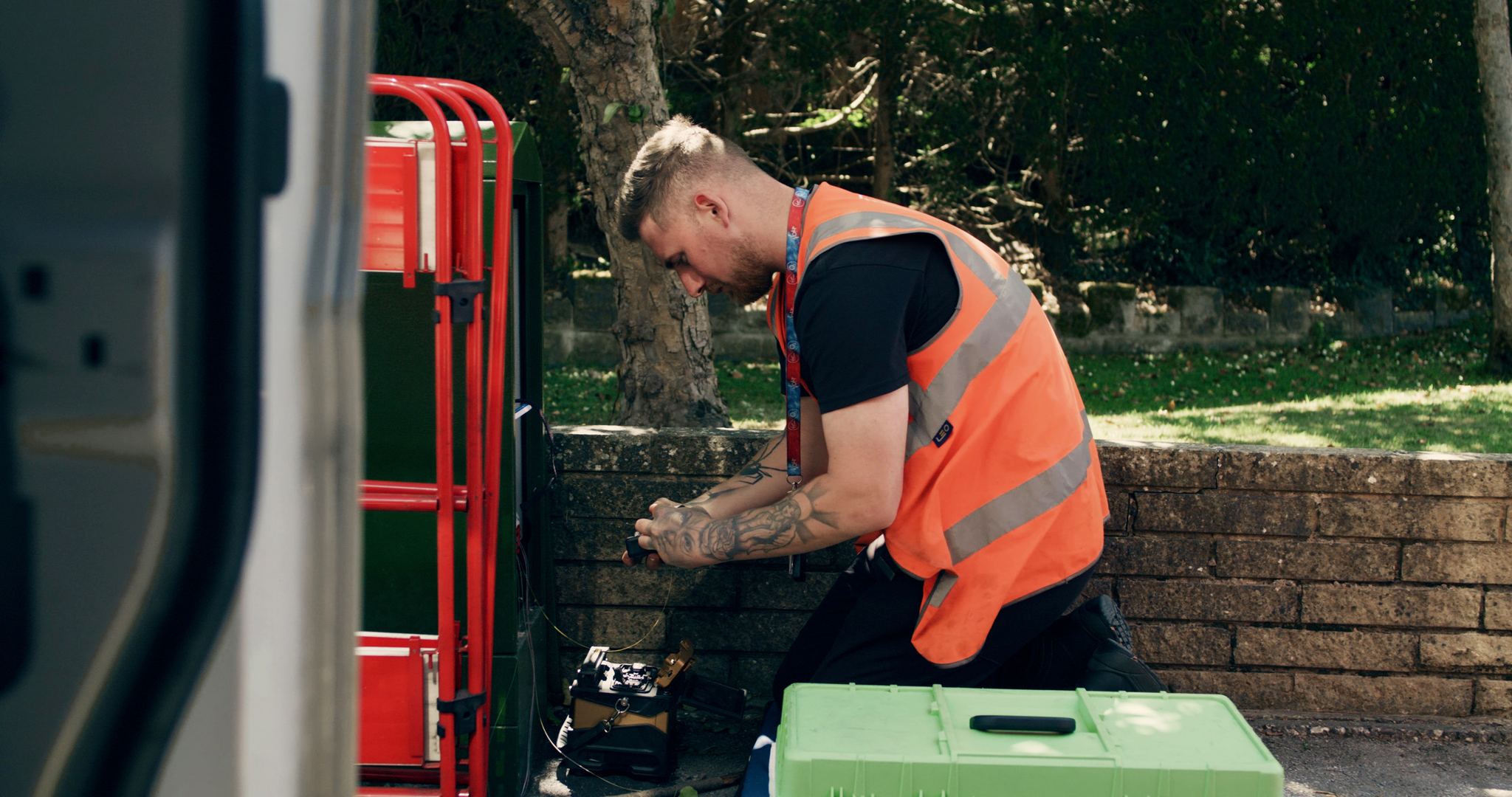
Silent, engine-off operation – no idling, less fuel and fewer emissions.
Clean, stable sine-wave power for sensitive test equipment.
230 V AC and 12 V DC power simultaneously.
Including built-in Jumpstart function for flat starter batteries.
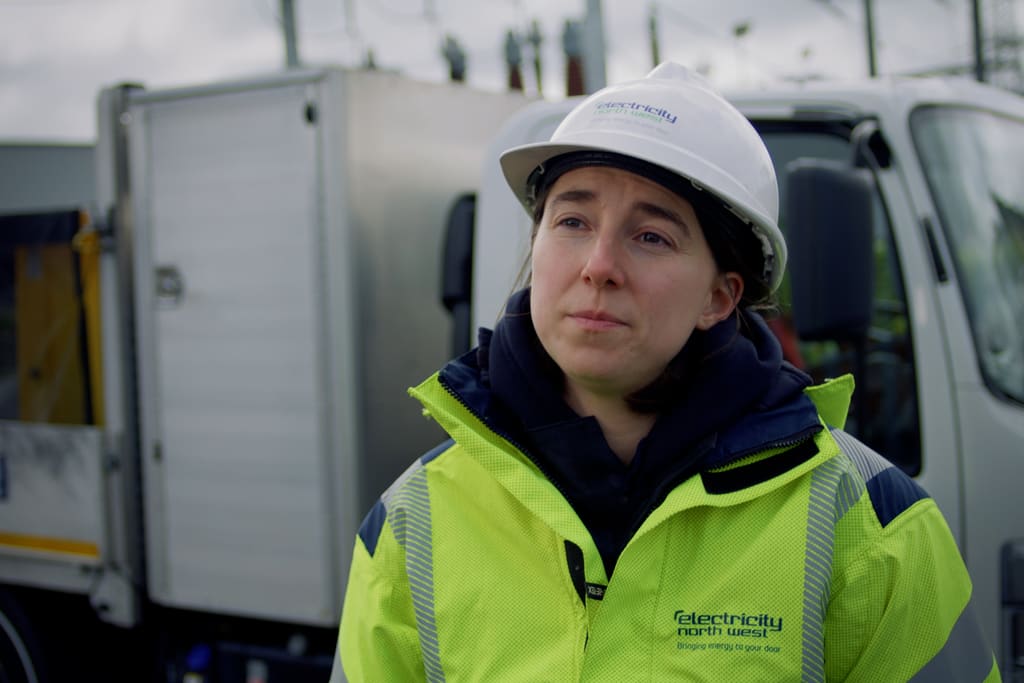
"It can all be done with engine off."
Ben Hughes, Regional Operations Manager
The challenge. The work van is a mobile workplace and needs power for tools.
How can you get 230V power in a van?
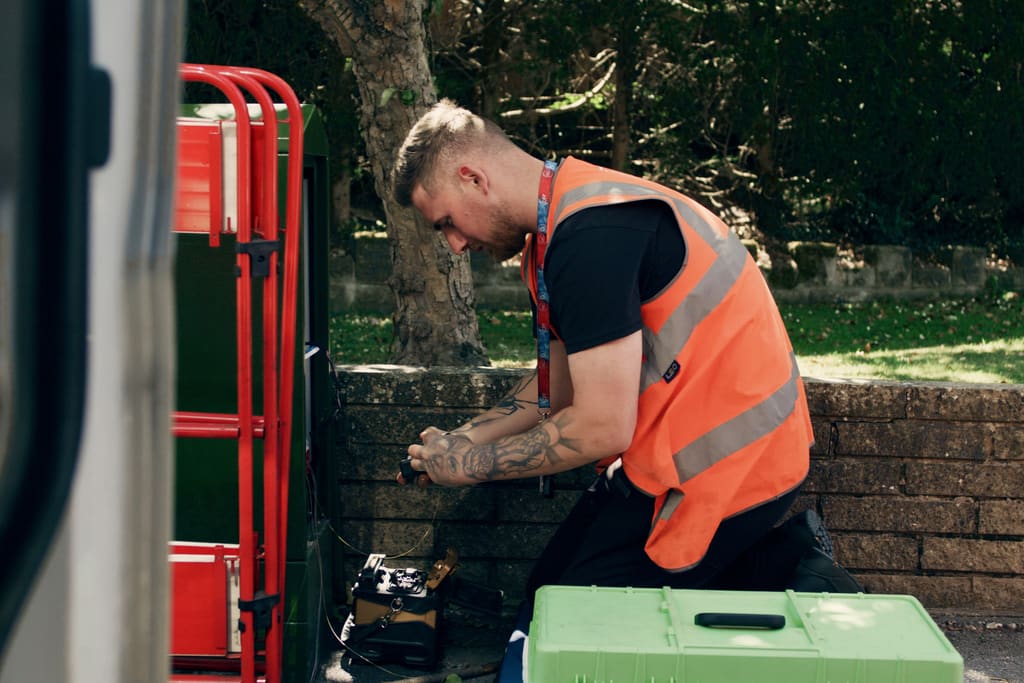
For many tradespeople and service technicians, the work van is a mobile workplace. But despite carrying professional tools and equipment, one essential thing is often missing: reliable access to 230 V power.
That can mean relying on an external mains connection, a portable generator or leaving the van engine idling to get the job done.
Fortunately, there are smarter ways to bring 230 V power into a van
There are several ways to achieve 230 V in the work van:
Conventional vans typically operate on a 12 V electrical system, while many power tools, battery chargers and electrical appliances require 230 V AC.
To supply 230 V from a 12 V battery, you need an inverter. This converts direct current (DC) from the battery into alternating current (AC), similar to the power supplied by a standard mains socket.
12 V to 230 V inverter: A relatively simple solution powered by the vehicle battery. The battery capacity, installation and inverter output determine which tools and appliances can be used.
Separate battery system with inverter and charger: Provides an independent source of 230 V power without running the engine, but requires multiple components and a more complex installation.
All-in-one lithium power supply: Combines the battery, inverter and charger in one compact unit, delivering both 230 V AC and 12 V DC.
The LPS II series
One system.
A better way to work.


How much power do you need in your work van?
Charging a laptop is very different from running an air compressor, an angle grinder or other demanding power tools. When choosing a power supply, there are three important factors to consider:
Power (W) indicates how much power a tool or appliance requires during operation.
Battery capacity (Wh or kWh) indicates how much energy the battery can store and therefore influences how long your equipment can operate between charges.
Starting current is the short, higher current demand that some equipment, particularly motor-driven tools, requires when starting.
A 2,000 W inverter is not necessarily sufficient for a tool that normally consumes less than 2,000 W. If the tool has a high starting current, the inverter may still become overloaded.
You also need to consider the combined load. When several tools or appliances are used simultaneously, the power supply must be capable of handling their total demand.
This is particularly important in professional work vans, where battery chargers, work lights and power tools often need to operate at the same time.
Calculate your power requirements instead of guessing.
Choosing the right battery capacity and inverter output is not always straightforward.
With the Clayton Power online system configurator, you can select the tools and electrical equipment you use during your working day and specify how long each item needs to operate.
This gives you a clearer picture of your power and energy requirements and helps you identify a suitable system for your work.
230 V power in electric vans – is the built-in socket enough?
An increasing number of electric vans are equipped with built-in 230 V power outlets. While convenient, having a mains socket in an EV does not necessarily mean it can support the demands of professional tools and equipment throughout the working day.
Reliable 12V DC supply at the same time.
Depending on the vehicle and its specifications, there may be limitations on available power, the number of appliances that can operate simultaneously and whether the socket can be used when the vehicle is parked.
Tools with high starting currents can present additional challenges, even when their normal power consumption is within the socket's rated output.
Professional work vans also need more than 230 V. Work lights, warning beacons and other auxiliary equipment often require a reliable 12 V DC supply.
So the real question is not simply whether your electric van has a 230 V socket.
It's whether the complete power system can safely and reliably run the equipment you need – at the same time.
A complete 230 V and 12 V power supply in one unit.
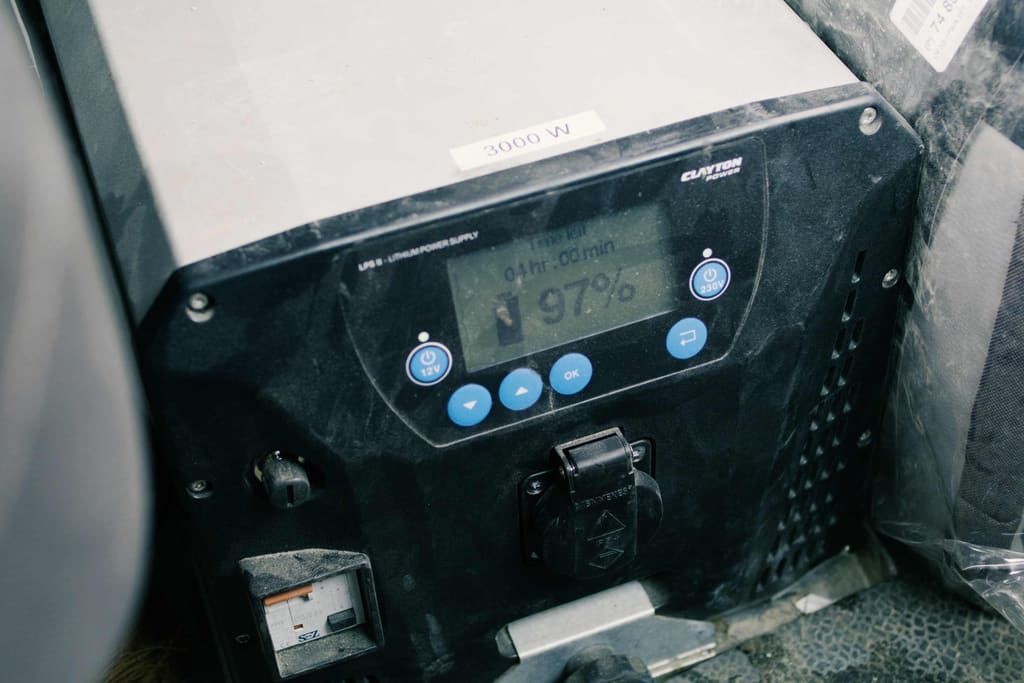
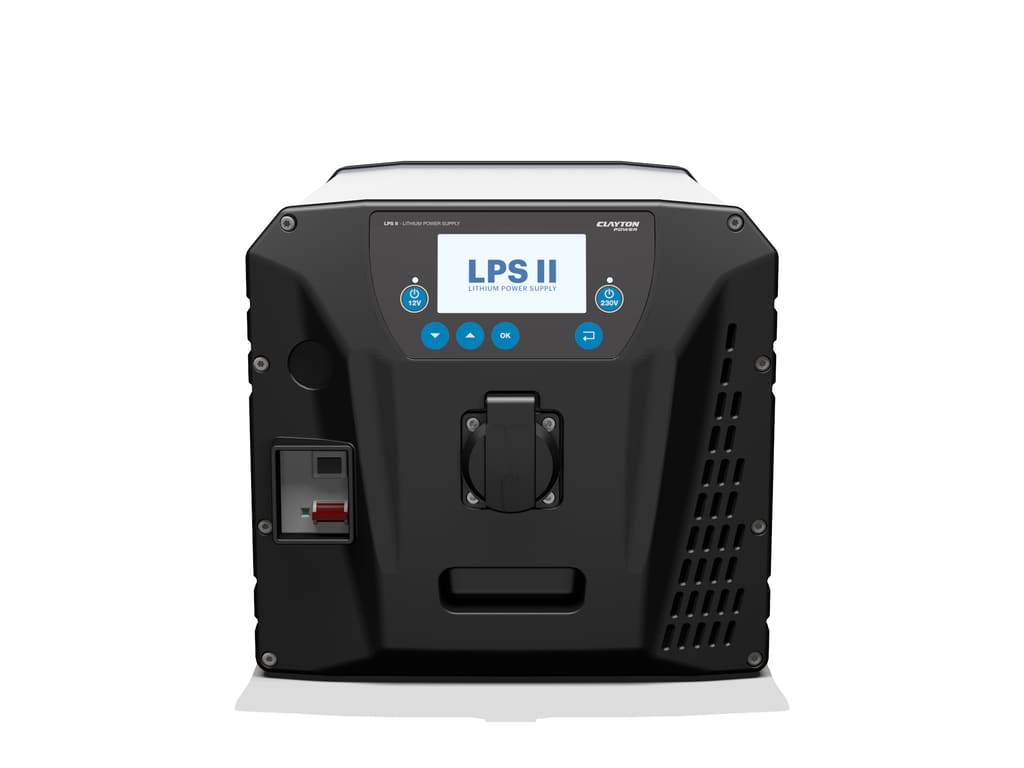
At Clayton Power, we developed the Lithium Power Supply (LPS II) for professional work vans where reliable mobile power is an essential part of the working day.
LPS II combines a lithium battery, pure sine wave inverter and charger in one compact unit. It delivers both 230 V AC and 12 V DC without the complexity of installing multiple separate components.
The system can power several tools and appliances simultaneously, provided their combined demand remains within the system's capacity.
LPS II can be recharged while driving or from other energy sources, depending on the model. Selected models also support solar charging without requiring a separate solar charge controller.
This makes it a flexible solution for both conventional work vans and EVs that need a reliable, independent power supply.
Run multiple tools without idling or a generator.
For many mobile operations, being able to work independently of the vehicle engine makes a significant difference.
A battery-based power supply allows you to operate 230 V tools and equipment without running a fuel-powered generator or leaving a diesel van idling. That means less noise on site, no local exhaust emissions from generating power and greater flexibility when working in locations without access to mains electricity.
This is particularly valuable for service engineers, utility companies, contractors and maintenance teams working across multiple locations.
Whether the van is parked at a construction site, beside an installation or outside a customer's premises, work can continue as long as the power system has sufficient capacity. And when several tools and appliances can run simultaneously, there is no need to constantly choose between battery chargers, work lights and power tools
A complete 230 V and 12 V power supply in one unit.
At Clayton Power, we developed the Lithium Power Supply (LPS II) for professional work vans where reliable mobile power is an essential part of the working day.
Pure sine wave inverter and charger in one compact unit
LPS II combines a lithium battery, pure sine wave inverter and charger in one compact unit. It delivers both 230 V AC and 12 V DC without the complexity of installing multiple separate components.
The system can power several tools and appliances simultaneously, provided their combined demand remains within the system's capacity.
LPS II can be recharged while driving or from other energy sources, depending on the model. Selected models also support solar charging without requiring a separate solar charge controller.
This makes it a flexible solution for both conventional work vans and EVs that need a reliable, independent power supply.
Example: LPS II 3000 – 2 kWh
For work vans with higher power requirements, the LPS II 3000 offers:
+ 230 V AC pure sine wave output with 2,300 W continuous power
+ Up to 3,000 W for 10 minutes
+ Up to 13,000 W peak inrush capability for demanding equipment start-up
+ 12 V DC output for electrical equipment and auxiliary systems
+ Integrated LiFePO4 battery with 2,112 Wh nominal capacity
+ Charging from the vehicle, mains electricity or solar panels
The LPS II 3000 is designed for professionals who need powerful, reliable electricity for their tools and equipment without depending on an external mains connection.
Choosing the right 230V power supply for your van
The best solution is not necessarily the biggest inverter or the largest battery.
It's the power system that matches the work your van needs to perform.
Which tools do you use? Will several appliances run simultaneously? How long do you need to work between charges? And do you also need 12 V power for auxiliary equipment?
Understanding these requirements makes it easier to choose the right combination of inverter output and battery capacity.
With Clayton Power's online system configurator, you can start with your own tools and equipment and find a solution that matches your working day.
230 V power in your van shouldn't limit what you can do. It should give you the freedom to work wherever you're needed.

Ready to make your work vehicle more capable?
Tell us what equipment you need to power and how your vehicle is used. We will help you find a setup that fits your daily operations.
Give Clayton Power a ring: +45 46 98 57 60
or see how to improve fleet performance
Proof in the field
Real examples of how mobile teams use Clayton Power to support reliable operation, cut their reliance on generators, and make service vehicles more capable day to day.